
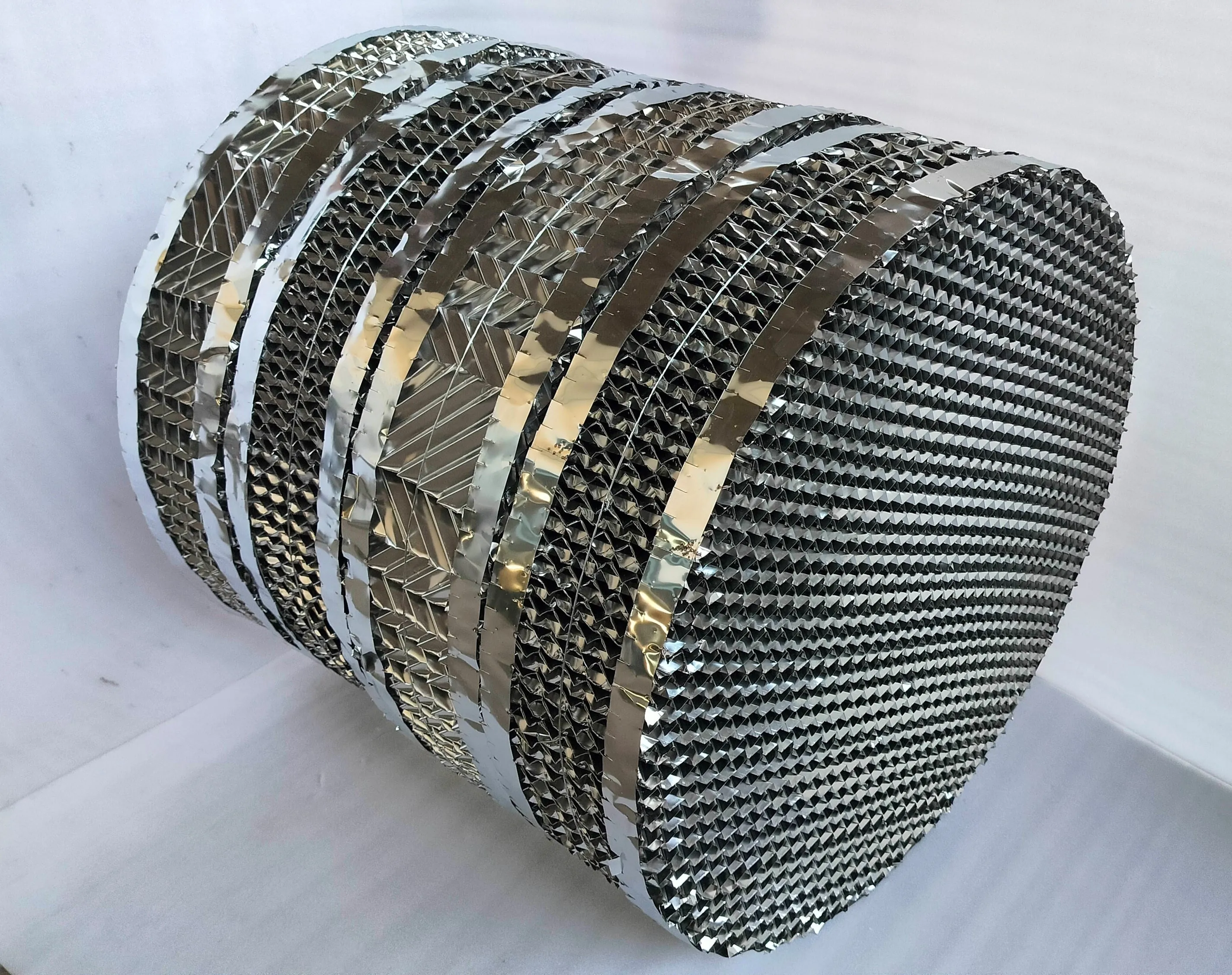
Overview
Enhancing gravity separation
The chemical processing and refining industry encompasses many applications where two liquid phases are made to intimately contact one another, leading to dispersion of one phase in the other. Effective process performance depends on separating the two phases efficiently after their intimate interaction.
A mixture of immiscible liquids can be separated by gravity settling, but settling becomes increasingly difficult as the dispersed-phase droplet size decreases. Passing the dispersion through a suitable coalescer pack can enhance settling and increase separator capacity. Capacity gains of 50–200% over conventional gravity settlers may be achievable in suitable services, depending on the fluid properties, operating conditions and coalescer design.
Outlet dispersed-phase concentrations of 20–200 ppm may be achievable in suitable services, referring to free liquid above solubility limits. Achievable outlet quality and capacity gains are assessed for the specific application.
EVERSEP media types
Six coalescer families
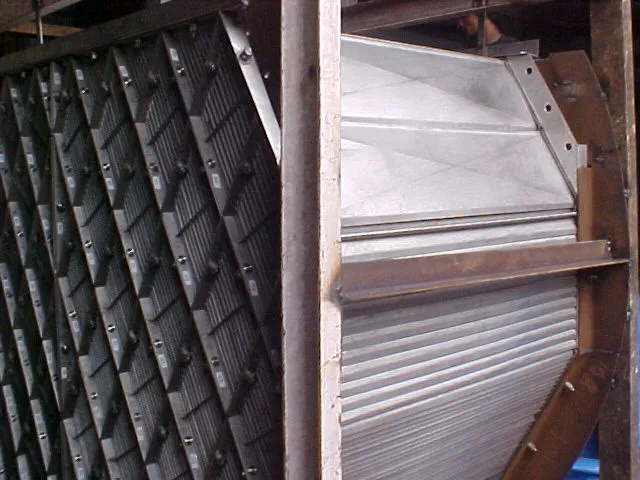
EVERPACK PP
Parallel Plate
They are made up of plates arranged parallel to flow, angled or tilted to assist drainage, with a typical length of 900–1,800 mm. Typically used for bulk separation in fouling-prone services.
- Target droplet size: 50–1,000 microns
- Relative Efficiency: Medium
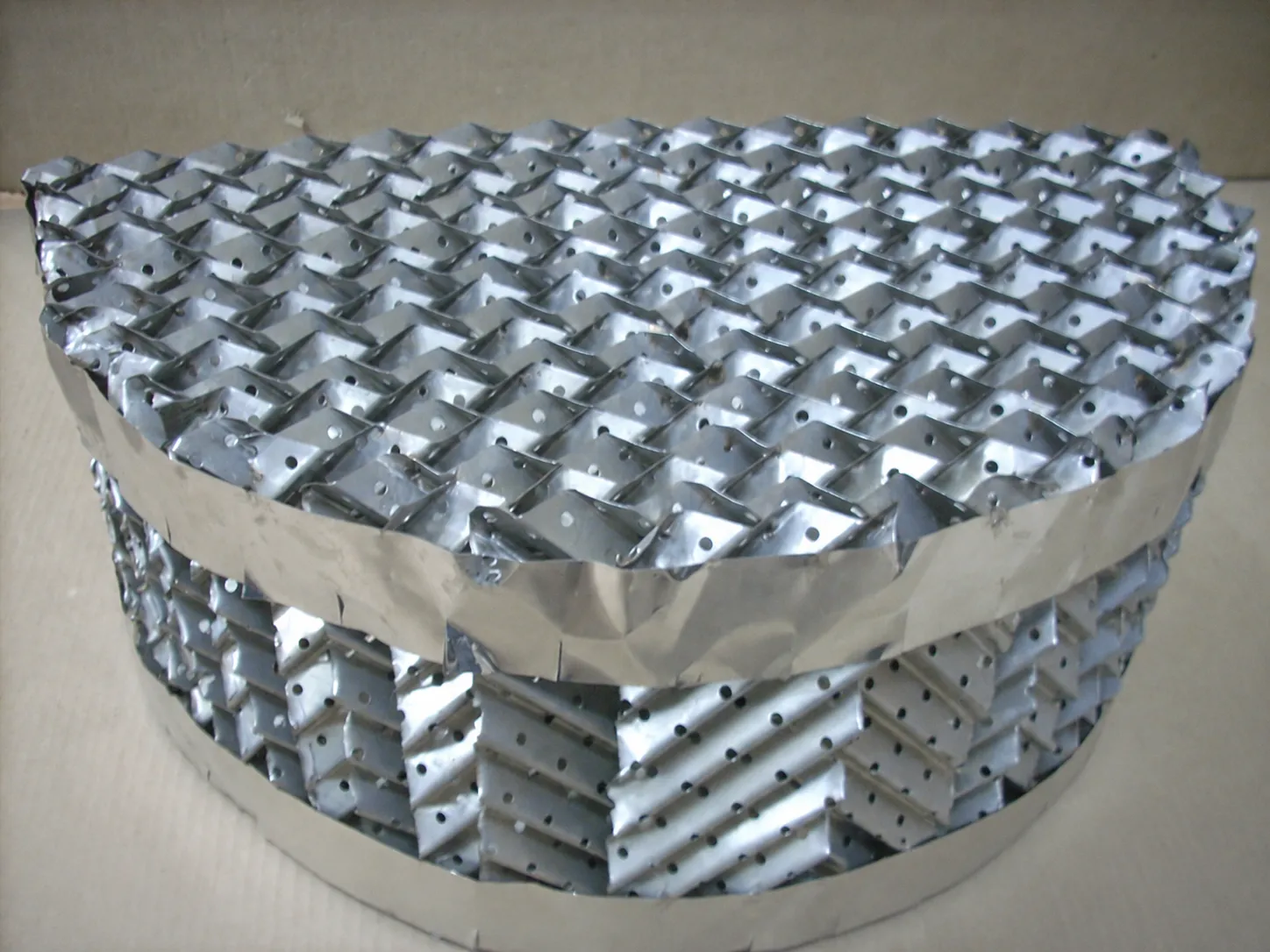
EVERPACK CP
Corrugated Plate
These types of coalescers are made up of a honeycomb structure (similar to structured packing), typically 600 mm thick. Generally used for bulk separation and wave suppression.
- Target droplet size: 50–1,000 microns
- Relative Efficiency: Medium
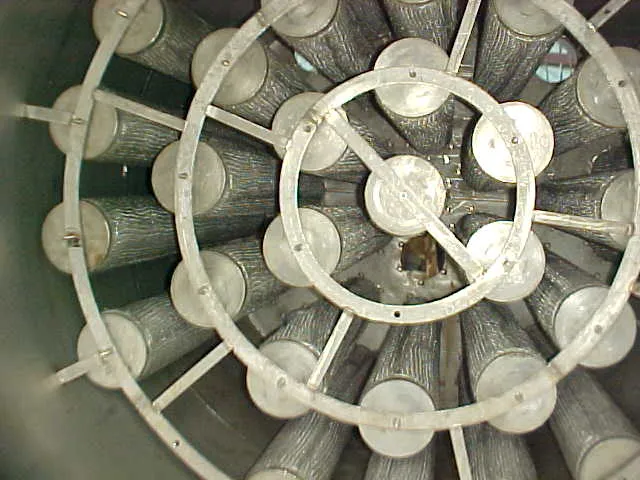
EF-PACK
Compressed Micro-fibre
Compressed micro-fibres in glass, plastic, or metals. Typically used in seal oil drying and polishing duties. They are typically made in cartridge form.
- Target droplet size: 1–35 microns
- Relative Efficiency: Very High
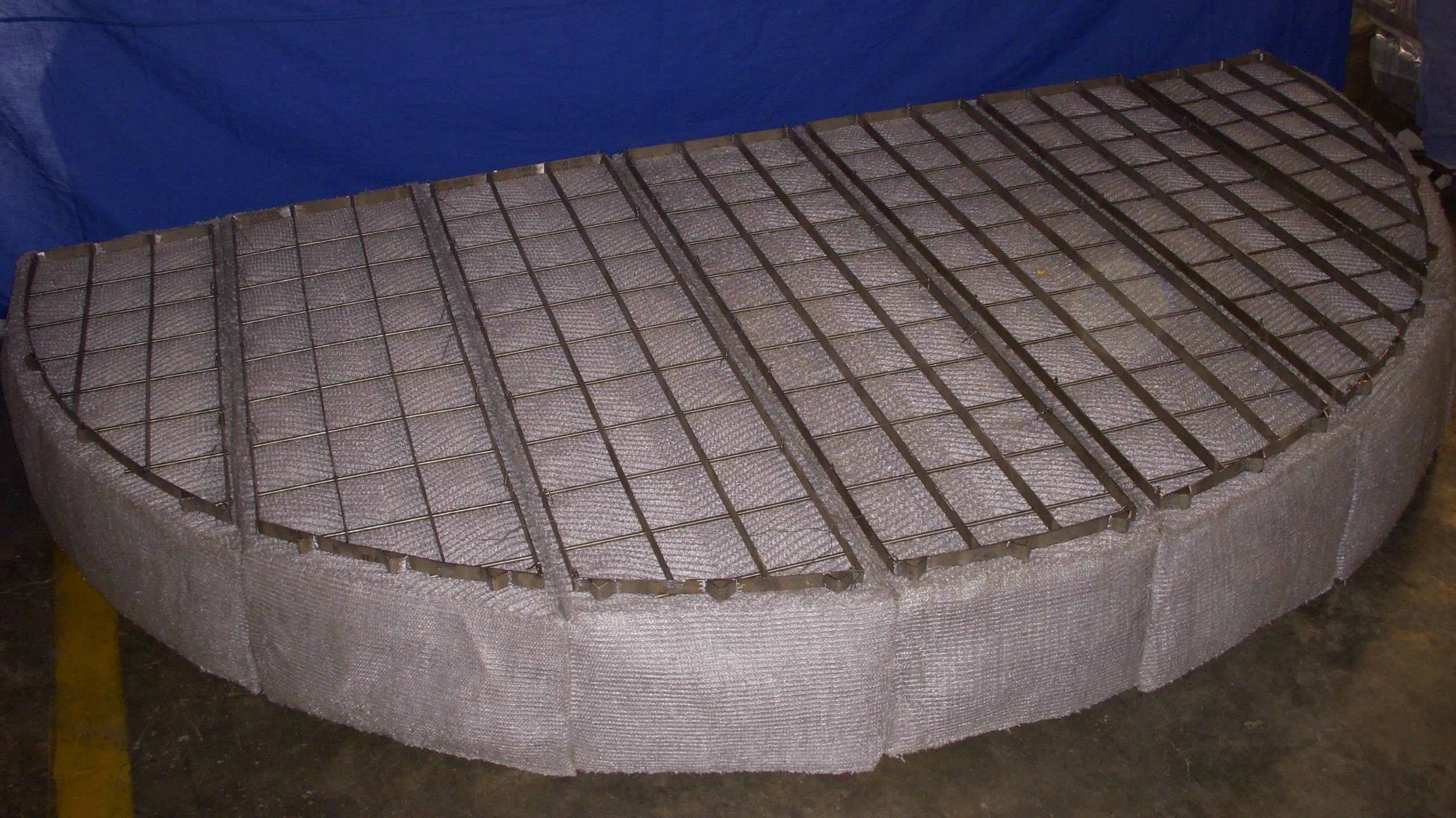
EDC-PACK
Co-knit Wire & Fibre
Co-knits of wire and fibre. Typically used in extractor effluent, raffinates, and NGL recovery applications.
- Target droplet size: 10–100 microns
- Relative Efficiency: Medium–High
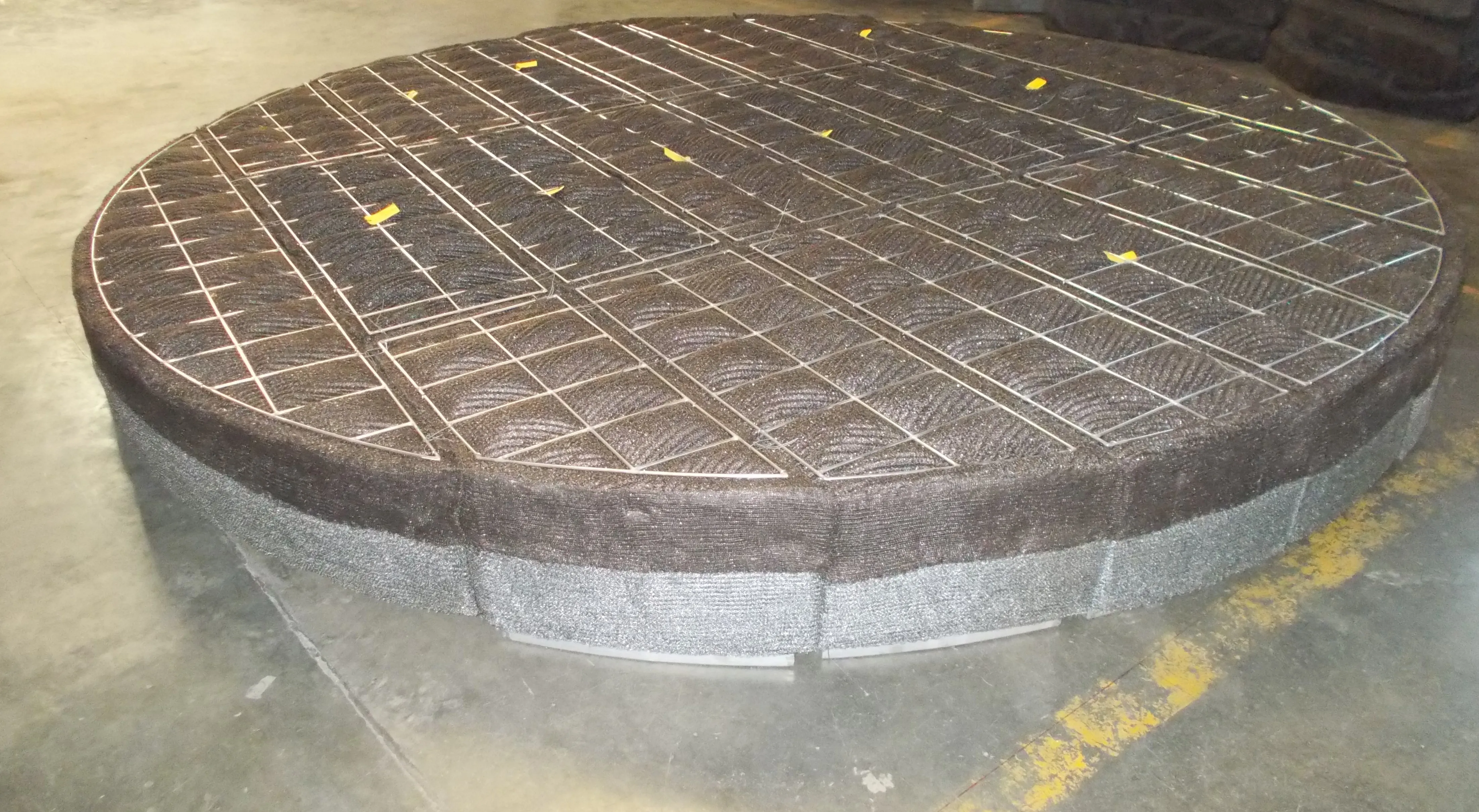
EK-PACK
Alternating Mesh + Fibre
Alternating knit mesh-pad types and fibre bed. Typically used in alkylation and ethylene dehydration applications.
- Target droplet size: 5–50 microns
- Relative Efficiency: High–Very High
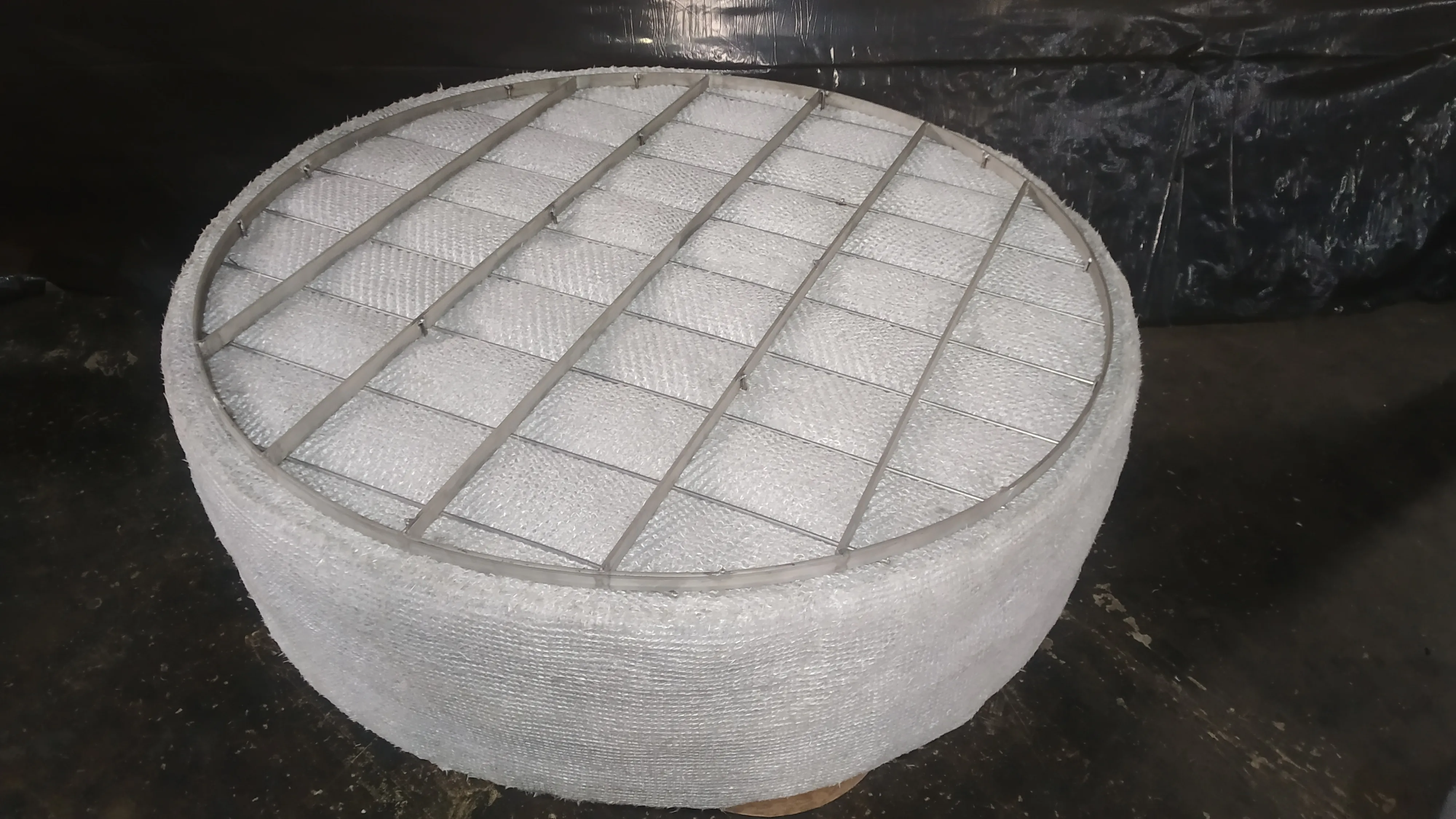
EM-PACK
Knitted Mesh Coalescer
Knitted mesh in metal, plastic, or bi-component construction. Typically used in steam stripping, crude desalter effluent, and reflux drum applications.
- Target droplet size: 100–500 microns
- Relative Efficiency: Low–Medium
Performance by type
Selection by droplet size and target separation
Swipe to view all columns →
| Type | Media | Target droplet size | Relative Efficiency |
|---|---|---|---|
| EVERPACK PP | Parallel Plate | 50–1,000 microns | Medium |
| EVERPACK CP | Corrugated Plate | 50–1,000 microns | Medium |
| EF-PACK | Compressed Micro-fibre | 1–35 microns | Very High |
| EDC-PACK | Co-knit Wire & Fibre | 10–100 microns | Medium–High |
| EK-PACK | Alternating Mesh + Fibre | 5–50 microns | High–Very High |
| EM-PACK | Knitted Mesh Coalescer | 100–500 microns | Low–Medium |
Trace impurities, pH changes, the presence of surfactants and solids dramatically alter coalescer performance. For unfamiliar or challenging services, we recommend laboratory testing followed by pilot-plant trials or on-site slipstream testing before installing a full-size commercial unit.
Plate vs. mesh vs. cartridge
Choosing between configurations
Plate coalescers are suitable for fouling services, with plate spacing and inclination selected to suit the duty. Typical inclinations are 45°, increasing to 60° for more severe fouling to encourage solids to slide off the plates into drainage channels.
Mesh-pad coalescers, including dual-media co-knit designs, are suitable for clean services. They can reduce the required size of new gravity separators or improve separation performance when retrofitted into existing vessels.
Cartridge coalescers are suitable for demanding services requiring high separation efficiency, including applications targeting droplets down to 1 micron.
Vertical vessels
Coalescers in vertical vessels
Coalescers can be installed in vertical vessels where space is limited. In counter-current arrangements, settling droplets must overcome the upward flow of the continuous phase, so vessel sizing depends on the fluid properties and operating loads. Coalescer elements installed at the top and/or bottom of vertical extraction columns can improve product and solvent purity, with media selection tailored to the service, including low-interfacial-tension systems.
Applications
Where EVERSEP coalescers are installed
- Refinery: caustic / amine treatment of hydrocarbons
- Refinery: water washing dispersion separation
- Refinery: liquid-liquid extraction columns
- Refinery: crude desalter effluent
- Offshore: oil / produced-water separation
- Offshore: three-phase separator vessel-size reduction
- Offshore: bilge water effluent treatment
- Chemical: azeotropic distillation overheads
- Chemical: post steam-stripping liquid separation
- Petrochemical: alkylation
- Petrochemical: ethylene dehydration